Future Computers
What Will Computers Look Like in 30 Years?
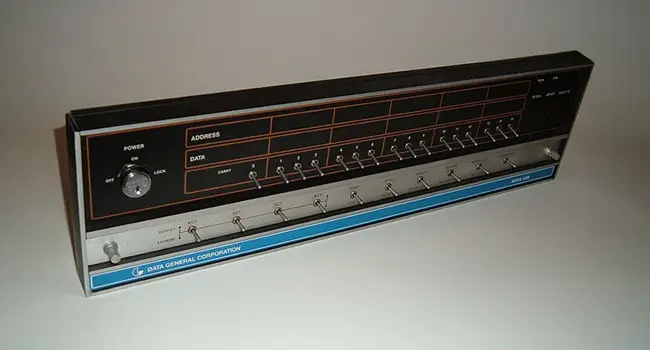
The picture above is the front panel from my very first computer, a 1982, Data General Nova 1200. It was the cat's pajamas because it allowed me to enter two characters (16 bits) at a time, instead of only eight bits (a byte). I was pleased as punchcards to enter my ten-letter name in under a minute in binary code. Today, I talk into my smart phone, and as quick as my kids, it talks back.
My point, (before I forget it), is that I went from toggle switches to voice recognition in just 30 years. From DOS to Windows. From the first Mac to the latest iPhone. From Pong to Angry Birds. What advancements will I, (yes, I mean me), see in the next 30 years? What changes in computers will you see in your lifetime? It's truly mind boggling.
Moore's Law
Before posting an article about the future of computers, any blogger worth their weight in silicon will research Moore's Law, the law named after Intel co-founder Gordon E. Moore.
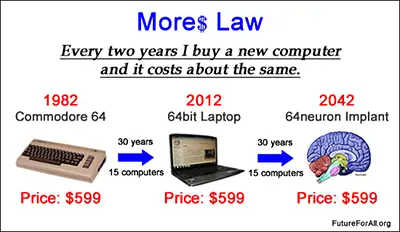
Moore's Law, (more of an observation turned prediction that has more or less held up), is the observation that the number of transistors in a dense integrated circuit (IC) doubles about every two years - Wikipedia.
Computers of Tomorrow
Today's computers operate using semiconductors, metals and electricity. Future computers might use atoms, dna or light. Moore's Law predicts doubling, but when computers go from quartz to quantum, the factor will be off the scale.
What would the world be like, if computers the size of molecules become a reality? These are the types of computers that could be everywhere, but never seen. Nano sized bio-computers that could target specific areas inside your body. Giant networks of computers, in your clothing, your house, your car. Entrenched in almost every aspect of our lives and yet you may never give them a single thought.
What will computers look like in 30 years? Trick question. You won't see them at all.
Ubiquitous computers, also known as pervasive computers, are embedded computing devices that are seamlessly integrated into the everyday objects and environments around us. Imagine a world where your clothes monitor your health, your fridge reorders groceries, and your walls display personalized information – that's the vision of ubiquitous computing.
Grasping the Technologies
Understanding the theories behind these future computer technologies is not for the meek. My research into quantum computers was made all the more difficult after I learned that in light of her constant interference, it is theoretically possible my mother-in-law could be in two places at once.
If you have the heart, take a gander at the most promising new computer technologies. If not, dare to imagine the ways that billions of tiny, powerful computers will change our society.
Data General Nova 1200 image from Wikipedia.
Future Computer Articles and Web Sites
I search the internet daily for new articles from around the world that interest me or I think will interest you. My hope is that it saves you time or helps students with their assignments. Listed by most recent first, dating back to 2005.
-
Inside the sub-zero lair of the world's most powerful computer from BBC
-
Scientists Turned Ordinary Shiitake Mushrooms into Living Computers from ZME Science
-
Scientists Are Building Computers Out of Living Brain Cells from ZME Science
-
The chemical computer: an energy-efficient computing alternative from Innovation Origins
-
I just saw the future of computing — and it makes me a believer in AR smart glasses from tom's guide
-
A new way of seeing, a new way of computing from Princeton University
-
Artificial intelligence drives need for real data storage innovations from ASU News
-
Scaling up Neuromorphic Computing for More Efficient and Effective AI Everywhere and Anytime from UC San Diego
-
What Is Spatial Computing? from NVIDIA
-
Intel's next-gen Core Ultra chips could set a new high standard for mobile computing in 2025 from ZDNet
-
Graphene Interconnects Aim to Give Moore's Law New Life from IEEE Spectrum
-
The Future of Computing is Physics from UC San Diego Today
-
Legendary video game developer imagines a future where GPUs don't need PCs from Tom's Hardware
-
This Northeastern co-op helped develop algorithms for high-performance ‘brain-inspired’ computing hardware from Northeastern Global News
-
Why diamonds may be a computer's best friend from New Atlas
-
Magnetic Magic: Swirling Magnons Set to Revolutionize Computing from SciTechDaily
-
Magnetic Marvels: NVIDIA’s Supercomputers Spin a Quantum Tale from NVIDIA
-
'Brain-in-a-jar' biocomputers can now learn to control robots from New Atlas
-
Aurora supercomputer heralds a new era of scientific innovation from Argonne National Laboratory
-
Expect a Wave of Wafer-Scale Computers from IEEE Spectrum
-
Argonne’s Aurora supercomputer breaks exascale barrier from Argonne National Laboratory
-
Research combines DNA origami and photolithography to move one step closer to molecular computers from Phys.org
-
Turbocharged Skyrmions: Accelerating Toward the Future of Computing from SciTechDaily
-
Microsoft Reportedly Building ‘Stargate' to Transport OpenAI Into the Future from Gizmodo
-
Clearly, the Future? A Look at Lenovo's Wild Transparent Concept Laptop, 'Project Crystal' from PC Magazine
-
Analog Computers May Work Better Using Spin Than Light from IEEE Spectrum
-
The Rise of AI PCs: What to Expect from Laptop Mag
-
What is spatial computing? from Android Police
-
This dual-OLED Lenovo could be the future of laptops from PC Gamer
-
Wearable Clip Mouse goes on the fingers, not on a pad from New Atlas
-
MIT Makes Probability-Based Computing a Bit Brighter from IEEE Spectrum
-
Moore’s law in peril and the future of computing from Physics World
-
We're on the brink of the biggest changes to computing's DNA and it's not just quantum that's coming from PC Gamer
-
New computer memory tech could power the AI of the future from TNW
-
Envisioning the future of computing from MIT News
-
The most powerful end-to-end AI supercomputing platform NVIDIA video
-
Breaking the heat barrier of computer innovation from UC Riverside
-
This Experimental Laptop Design Has a Foldable Wrist Rest from Gizmodo
-
Scientists Broke a Major Computer Design Barrier — And It Could Change Tech As We Know It from Inverse
-
Future Computers Could Run on Lab-grown Brains from Inverse
-
This Chipmaking Step Is Crucial to the Future of Computing—and Just Got 40x Faster Thanks to Nvidia from Singularity Hub
-
The Limits of Computing: Why Even in the Age of AI, Some Problems Are Just Too Difficult from The Singularity
-
Could future computers run on human brain cells? from John Hopkins University
-
The switch - analogous to a transistor - made from a single fullerene molecule from Nanowerk
-
Limits to computing: A computer scientist explains why even in the age of AI, some problems are just too difficult from The Conversation
-
100 Times Better – Tiny Magnetic Vortices Could Transform High-Performance Computers from SciTechDaily
-
Intel and AMD are building AI into PCs. It doesn’t matter yet—but it will from PC World
-
The PC is getting weird again - and that's exactly what we need from ZDNet
-
Dell wants to change how we repair and recycle laptops in the future from PC Gamer
-
Maybe you need a workstation instead of a PC from Computer World
-
New materials for the computer of the future from Nanowerk
-
The State of the Transistor in 3 Charts from IEEE Spectrum
-
We will see a completely new type of computer, says AI pioneer Geoff Hinton from ZDNet
-
Breaking the scaling limits of analog computing from MIT News
-
The Future of the Transistor Is Our Future from IEEE Spectrum
-
This AI Supercomputer Has 13.5 Million Cores—and Was Built in Just Three Days from Singularity Hub
-
Scientists find a surprising answer to the future of computers — paper from Digital Trends
-
Why Wasm is the future of cloud computing from Infoworld
-
The dirty little secret about edge computing from InfoWorld
-
Programming languages: It's time to stop using C and C++ for new projects, says Microsoft Azure CTO from ZDNet
-
Is Moore’s law dead? from Verdict
-
Why laptops with foldable screens are the future from The Week
-
What is PCIe 5.0? from Digital Trends
-
What is ambient computing? Everything you need to know about the rise of invisible tech from ZDNet
-
Future Brings CPU Modules, And The Future Is Now from Hackaday
-
Brain-Like Computing Aim Of New Initiative from Texas A&M Today
-
This startup claims to have unlocked the secret to speedy CPUs from Digital Trends
-
The future of laptops is foldable from pocketnow
-
Whatever Happened to the Molecular Computer? from IEEE Spectrum