Future of Nanotechnology
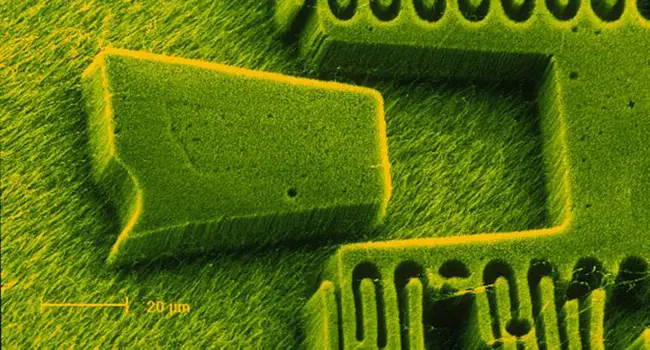
Nanotechnology is a broad term that covers many areas of science, research and technology. In its most basic form, it can be described as working with things that are small. Things so tiny that they can't be seen with standard microscopes. The same stuff that has always been there, but we just couldn't see it. The building blocks of nature, atoms and molecules. Nano-technology involves understanding matter at the "nano" scale.
Array of vertically aligned carbon nanotubes image credit: CSIRO, CC BY 3.0, via Wikimedia Commons
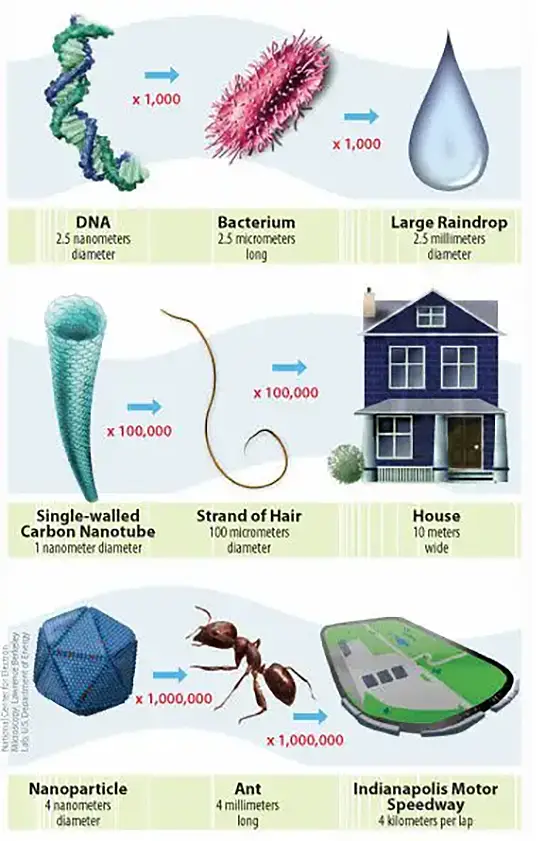
This illustration from nano.gov gives visual examples of the size and the scale of nanotechnology, showing us just how small nanotechnology actually is.
A nanometer is one-billionth of a meter. In comparison, a human hair is about 100,000 nanometers in diameter.
All dimensions are approximate. Nanoparticle is courtesy of the National Center for Electron Microscopy, Lawrence Berkeley Lab, US Department of Energy.
Buckyballs and Nanotubes
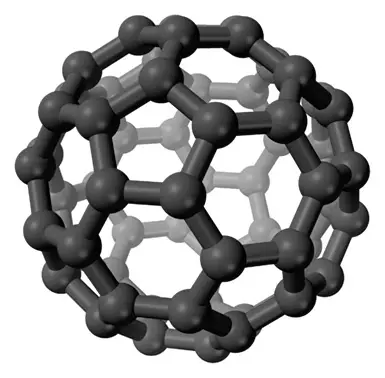
A fullerene is any molecule composed entirely of carbon, in the form of a hollow sphere, ellipsoid, or tube. Spherical fullerenes are also called buckyballs, and cylindrical ones are called carbon nanotubes or buckytubes.
Because of their unique properties, nanotubes and buckyballs open a path to many futuristic applications. Because of their size, they pose a risk to human health.
How is Nanotechnology Being Used Today?

Nanotechnology is being used to make surfaces self-cleaning and stay clean for a long time. Nanotech can be found in cosmetics, sunscreens, clothing and many other consumer products today.
Types of Nanomaterials
Carbon Nanotubes
Fullerenes and Buckyballs
Dendrimers
Fine and Ultrafine Particulates in Air
Quantum Dots and Nanocrystals
Titanium Dioxide nanoparticles
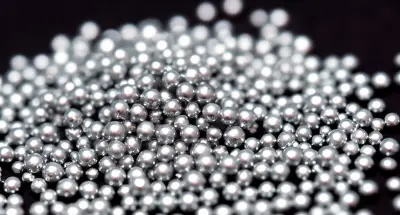
Silver nanoparticles
Silver nanowire
Other nano-sized particles
Nanotechnology Risks

Ready or not, here it comes. In the next 20 years, nano-technology will touch the life of nearly every person on the planet. The potential benefits are mind boggling and brain enhancing. But like many of the great advancements in earth's history, it is not without risk. Here are some of the risks posed to society by nanotechnology.
Nanobots

Nanobots do not exist yet, but when they do, futurists predict possible uses for nanorobots will include molecular manufacturing (nanofactories) and medical nanobots that steer autonomously through your blood stream making repairs and guarding against infection.
Nanotechnology and Medicine

Nanomedicine is promising great things, including great advancements in the treatment of cancer. Imagine swarms of nanobots swimming through your veins, repairing cells or attacking viruses. On second thought, get that image out of your mind, it's a bit creepy. Just close your eyes and wait for the healing to begin.
Nanotechnology Articles, Videos, and Web Sites
-
I search the internet daily for new articles from around the world that interest me or I think will interest you. My hope is that it saves you time or helps students with their assignments. Listed by most recent first. Hit NEXT button for more articles
-
Elusive 3D printed nanoparticles could lead to new shapeshifting materials from Stanford University School of Engineering
-
How nano’s gains are revolutionising the sports industry from Nano Magazine
-
Scientists shine new light on the future of nanoelectronic devices from Argonne National Library
-
Nanotechnology in agriculture: A double-edged sword from Environmental Health News
-
The dawn of nano-agriculture: How nanotechnology is shaping sustainable farming from Potato News Today
-
The Next Wave of Nanomaterials: Precision-Engineered Nanoscrolls from SciTechDaily
-
Nano-scale inks could lighten airliners by hundreds of kilograms from New Atlas
-
Scientists create qubits using precision tools of nanotechnology from Argonne National Laboratory
-
The one-pot nanosheet method catalyzing a green energy revolution from Nanowerk
-
New nanotechnology makes water harvesting from air far easier from Nanowerk
-
Revolution in Nanotech: A Motor That’s 1/10,000th of a Millimeter from SciTechDaily
-
The Hurdles Facing Nanotechnology in the Food Industry from AZoNano
-
Quantum dots − a new Nobel laureate describes the development of these nanoparticles from basic research to industry application from The Conversation
-
The nanoscale magic of structural colors from Nanowerk
-
Sprayable nano-inks could be the key to bendable screens from Create Digital
-
What is nanotechnology? from Cosmos Magazine
-
Leveraging nanotechnology to save coral reefs from Arizona State University
-
A nanocrystal shines on and off indefinitely from EurekAlert
-
Nanotechnology: Accelerating a Quantum Society from AZoNano
-
Single-molecule valve: A breakthrough in nanoscale control from Nanowerk
-
Shapeshifting Nano-Devices Slide Into Place from IEEE Spectrum
-
Nano-architectured materials that respond to light in real time from University of Sydney
-
Nanoscale 3D Structure to Control Light from Tech Briefs
-
First real-time glimpse into the growth habits of nanoparticles (w/video) from Nanowerk
-
Nanophysics: the right twist from Nanowerk
-
What is Ceramic Nanotechnology? from AZoNano
-
A closer look at the nanoscale and beyond from MIT News
-
Making nanoparticle building blocks for new materials from MIT News
-
When the light is neither 'on' nor 'off' in the nanoworld from Nanowerk
-
What Is Nanotechnology? from Built In
-
Nanotechnology turns to shark skin and dragonfly wings from Nanowerk
-
Graphene is a proven supermaterial, but manufacturing the versatile form of carbon at usable scales remains a challenge from The Conversation
-
Wrapping of nanosize copper cubes can help convert carbon dioxide into other chemicals from Nanowerk
-
Twisted light separates nanoparticles by size in real time from Physics World
-
The Broad Scope of Nanotech Potential from StatNano.com
-
First electric nanomotor made from DNA material from Nanowerk
-
Can Nanotechnology Help to Advance Architecture? from AZoNano
-
Scientists Create Programmable Nanoparticle Toothbrush from Extreme Tech
-
Copper nanomesh second skin could be the future protection against all pathogens from ZME Science
-
What is Ferroelectricity and How Does it Apply Nanotechnology? from AZoNano
-
New Electric Eye Neuromorphic Artificial Vision Device Developed Using Nanotechnology from SciTechDaily
-
Autonomous nanomachines inspired by nature from Phys.org
-
How Can Twistronics Benefit Nanotechnology? from AZoNano
-
Nanocarrier spray: Better crops without genetic modification from EurekAlert
-
University of Michigan posted Nanotechnology: Theory predicts new type of bond that assembles nanoparticle crystals