Virtual Reality
What is Virtual Reality?
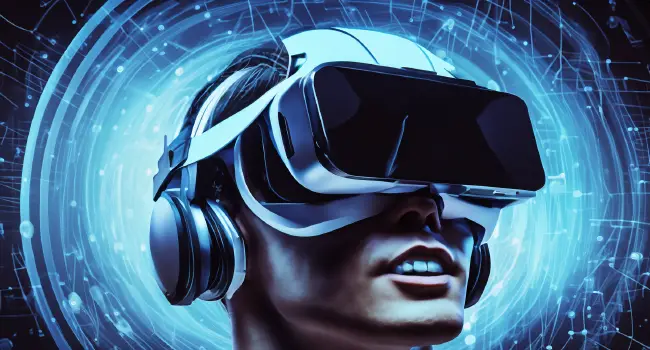
Virtual reality uses computers, gadgets, and software to make the user feel like they are actually in the environment of a simulation. The simulation could be of a real location, like a museum or an imaginary scene for a video game. The current state of VR technology for consumers is the VR Headset.
There are variety of virtual reality headsets on the market, from a cardboard holder for your smart phone, to a high-end VR headset. A typical VR headset contains lenses that makes the display look farther away, and high resolution display for each eye, sensors to track movement, like when you turn your head. Some VR systems use hand controllers to manipulate objects in the simulation. Headphones can be connected to further immerse yourself into a program.
Virtual reality hardware and software technology is in its infancy. Consumer complaints about VR technology include large heavy headsets, difficult setup, dedicated space, being tethered to a chair, and nausea. These problems limit the time you can comfortably use a VR system. Some are saying that VR will soon be great for socializing, work and education, but until the comfortability and ease-of-use issues are worked out, VR technology will be most popular for short games, movies, virtual visits, and training.
See also Augmented Reality
Virtual Reality Articles and Resources
I search the internet daily for new articles from around the world that interest me or I think will interest you. My hope is that it saves you time or helps students with their assignments. Listed by most recent first, dating back to 2005.
-
Tech hacks the nervous system to bring touch to virtual reality from Freethink
-
Meta wants to bring your own hands into VR, photorealistically from Mixed Reality News
-
VR vs. AR vs. MR: Types of Digital Reality Explained from How-to-Geek
-
We tested the most advanced haptic gloves in the world from Freethink
-
A metaverse high school is opening in Japan from The Verge
-
Virtual Worlds, Virtual Lives from NPR
-
The Present and Future of Virtual Reality in Medical Education from Cureus
-
Why virtual isn’t actual, especially when it comes to friends from The Harvard Gazette
-
Immersed Visor: Is the VR headset real or not? from Mixed Reality News
-
Varjo’s New AR Headset Is Built for Secret Labs from IEEE Spectrum
-
Smart textile breakthrough enables intuitive and dynamic haptic feedback for immersive VR experiences from Nanowerk
-
VR Optician Prescription Lenses Review: The solution for those wearing glasses - now also for Quest 3 from Mixed News
-
Meta: Can the firm's new headset stop virtual reality sickness? from BBC News
-
Metaverse: What happened to Mark Zuckerberg's next big thing? from BBC News
-
I can't stop thinking about this unique VR headset design from Tech Radar
-
How virtual reality technology is being used to improve the care of people living with dementia from ABC News (Australia)
-
(Virtual) Reality Check: How Long Before We Live in the 'Metaverse'? from Harvard Business School
-
Virtual reality has negative side effects – new research shows that can be a problem in the workplace from The Conversation
-
Meta's new headset prototype to offer unprecedented visual fidelity from Mixed Reality News
-
The VR Open / The world's first major in the metaverse from The Open
-
An origami-based haptic device that could enhance virtual reality experiences from TechXplore
-
The state of extended reality research from Penn Today
-
Apple’s rumored VR headset could have ridiculously high-end screens from The Verge
-
Apple has been openly building technology for its new mixed reality headset for years from 9to5Mac
-
Virtual Reality Could Soon Include Smells Thanks to New Wireless Scent Interface from Singularity Hub
-
Researchers hope this tiny wearable could become Smell-o-Vision for VR from The Verge
-
Virtual reality is imperfect and will stay so for a long time from Mixed Reality News
-
This virtual reality flight simulator fits in a suitcase from MIXED Reality News
-
Ignore the hype that we’ll all live in the metaverse. Let’s use virtual reality, but hardly at all from World Economic Forum
-
Virtual Reality has arrived, but are humans ready for it? from Bulletin of the Atomic Scientists
-
Tricks of the trade: Making VR projects a reality from Silicon Rebublic
-
Can mind-controlled VR games help stroke patients? from BBC News
-
What is a NeRF and how can this technology help VR, AR, and the metaverse from Mixed Reality news
-
Metaverse mastermind explains why VR is so difficult from Mixed Reality News
-
This VR headset makes you feel things on your lips, mouth and tongue from Euronews
-
The Virtual Reality of House of the Dragon from VFX Voice Magazine
-
VR diving with realistic graphics shows the immersive power of virtual reality from Mixed Reality News
-
Meta is testing members-only worlds for its social VR platform from The Verge
-
Virtual reality can be used to prevent infidelity and betrayal in real-world relationships from Phys.org
-
On the Virtual Road With Varjo's XR-3 Mixed-Reality Headset from PC Magazine
-
Forget the Metaverse: Get Ready for the Future-Verse from PC Magazine
-
Meta Unveils Its Meta Reality Mixed Reality System from VR Scout
-
10 VR Games and Apps Perfect For Newcomers from VR Scout
-
Won’t Virtual Reality Make Me Sick? from Gizmodo
-
New Stanford study shows choices of virtual environments and avatars can promote positive psychological outcomes in the metaverse from Stanford University
-
Neuroscientists examine the promise and limitations of VR from Western University
-
Why the metaverse (really) matters for travel from Accenture
-
VR Notre Dame from Excurio
Virtual Tour of the Great Wall of China - thechinaguide.com
-
Palmer Luckey Made a VR Headset That Kills the User If They Die in the Game from Motherboard
-
The First Things To Do In VR from Gizmodo
-
Meta’s New Headset Will Track Your Eyes for Targeted Ads from Gizmodo
-
Virtual reality and the future of society from The Varsity
-
The Tech That Will Push VR to the Limits of the Human Eye from Singularity Hub
-
Each guest experience will be different: VR and the future of theme parks from The Guardian
-
How Hell's Kitchen Is Moving Into Virtual Reality from Mashed
-
How many consumers are shopping in virtual reality and what can it offer them? from World Economic Forum
-
Meta's Next VR Headset Is Coming In October: What We Know About Meta Cambria, aka Quest Pro from CNET
-
Mirror Lake is Meta’s Next Big VR Headset Bet from VR Times
-
XR’s place in the metaverse, how hardware and software must evolve HTC VIVE video