Future of Robotics

Robotics, the field of designing, building, and operating robots, is rapidly evolving, bringing robots from science fiction to our everyday lives. The world of robotics is constantly evolving, pushing the boundaries of what's possible. From human-like helpers to tiny rescuers and strength-boosting suits, robots are not just science fiction anymore. They are increasingly becoming part of our lives, offering solutions to real-world challenges and shaping the future in exciting ways.
Robots will continue to automate many tasks across various industries, leading to increased production and reduced costs. They will play a more significant role in surgery, assisted living, and elderly care. Robots will increasingly handle hazardous tasks like bomb disposal, deep-sea exploration, and firefighting, reducing risks for human workers. Exoskeletons and other assistive technologies could empower people with disabilities and augment human strength and mobility in various fields.
Challenges to Robotics: Automation through robots could lead to job losses across various sectors. The increasing presence of robotics in society could raise concerns about social isolation and human-robot interaction. Unequal access to robotics technology could exacerbate existing socioeconomic inequalities. Increased use of robots, especially in surveillance and data collection, could raise privacy concerns. Questions around robot responsibility, decision-making, and potential biases.
Robopets
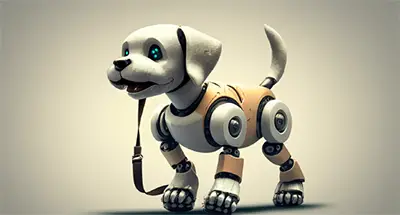
Robot pets offer companionship without the mess and responsibility of real animals. Robotic dogs and cats can provide emotional support for the elderly or lonely, while educational robot pets can teach children about coding and robotics. These interactive companions can even learn and adapt to their owners' preferences, offering a unique form of friendship.
Rescue Robots
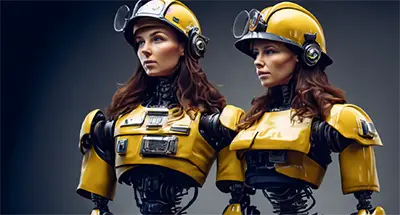
Future search and rescue robots hold immense promise for saving many lives in hazardous situations. These robotic heroes will be equipped with advanced technology and be capable of accessing dangerous areas such as collapsed buildings, burning structures, or toxic environments, minimizing human risk. Tiny microbots could access confined spaces and search for survivors trapped in narrow openings. Future search and rescue robots can become invaluable tools for saving lives and building a safer future.
Robotic Insects
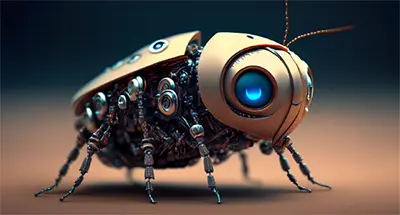
Miniature robots inspired by insects are making a big impact. These nimble bots can squeeze into tight spaces, making them ideal for search and rescue operations in collapsed buildings or disaster zones. Some insect-bots can even fly, assisting in environmental monitoring or agricultural tasks like crop pollination. Their small size and maneuverability make them valuable tools for tasks where traditional robots struggle.
Exoskeletons
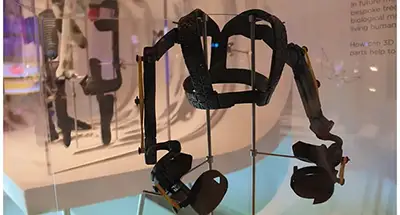
Exoskeletons are wearable robots that augment human strength and endurance. They can help construction workers lift heavy beams with ease or firefighters carry heavier equipment without fatigue. Exoskeletons are already being used in these industries, and their potential extends to rehabilitation, assisting people with disabilities, and even military applications.
Robotics Articles and Web Sites
Click here for robotics web sites
Robotic Competitions
VEX Robotics World Championship
-
I search the internet daily for new articles from around the world that interest me or I think will interest you. My hope is that it saves you time or helps students with their assignments. Listed by most recent first. Hit NEXT button for more articles
-
The Robot You’re Looking For: Introducing Sprout from Fauna Robotics
-
The hidden technology behind fluid robot motion from The Robot Report
-
The synthetic self from Aeon
-
The world’s smallest programmable, autonomous robots from Penn Today
-
Scientists create artificial neuron that can mimic different parts of the brain – a major step towards human-like robotics from Loughborough University
-
The value of physical intelligence: How researchers are working to safely advance the capabilities of humanoid robots from Iowa State University
-
Teaching robots to map large environments from MIT News
-
The world is just not quite ready for humanoids yet from TechCrunch
-
Robots, Meet Your New Teacher: Yourselves from USC Viterbi
-
A California city has hired adorable robots to do its dirty work from KTLA 5
-
How human roles are shifting in the age of robotics from WeForum
-
A Humanoid Robot Is Now on Sale for Under $6,000—What Can You Do With It? from Singularity Hub
-
Robots could sense both touch and proximity, by seeing through their arms from New Atlas
-
Robot regret: New research helps robots make safer decisions around humans from CU Boulder Today
-
From robotic dogs to magnetic slime: 9 ways robots are helping humans from WeForum
-
How durable, inexpensive robotic hands are made from Freethink
-
Boston Dynamics interview: ‘Ghastly’ grace, the uncanny valley, and the dawn of humanoid utility from Robotics and Automation News
-
AI humanoid robot capable vision, speech, and simulation video
-
Robotic helper making mistakes? Just nudge it in the right direction from MIT News
-
Turning worms into robots from The Varsity
-
Spring-loaded Robot Could Explore the Asteroid Belt Almost Indefinitely from Universe Today
-
Robot with Series Elastic Actuators arms and enhanced non-verbal communication video
-
A Tragic Robot Shutdown Shows Why Local AI Is So Important from How-to-Geek
-
GAC Group has unveiled its third-generation humanoid robot, GoMate video
-
Startup offering pre-orders of Eliza humanoid robot from Robotics and Automation
-
Humanoid robot head video
-
A ChatGPT Moment Is Coming for Robotics. AI World Models Could Help Make It Happen. from Singularity Hub
-
The Future of Robotics Training: Inside the Genesis Project from Geeky Gadgets
-
Shape-changing soft material for soft robotics, smart textiles and more from Harvard
-
Watch: Cyberoctopus breakthrough a giant leap forward for soft robotics from New Atlas
-
Humanoid Robot Hands Demo: Plugging in an Ethernet Cable video
-
Why Scientists Are Giving Robots Cat-Like Vision from ZME Science
-
Berkeley Humanoid robot video
-
The Palletrone is a robotic hovercart for moving stuff anywhere from IEEE Spectrum
-
Raising robots: Teaching robots things humans learn, including navigation, movement, dance, spatial reasoning from Purdue University
-
Robot worm video
-
The Best Bionic Leg Yet from IEEE Spectrum
-
New Energy Source Powers Subsea Robots Indefinitely from NASA
-
Bionic artificial skin returns tactile senses from The Engineer
-
Inside a AI humanoid robot production factory in China video
-
NVIDIA Announces Project GR00T Foundation Model for Humanoid Robots and Major Isaac Robotics Platform Update from NVIDIA
-
Understanding humanoid robots from Tech Crunch
-
A Climbing Robot with Long Extending and Bending Tape Measure Limb video
-
Humanoid robot testing video
-
The Challenges, Possibilities and Ethics of AI-Enabled Robots from University of Texas
-
A key to the future of robots could be hiding in liquid crystals from John Hopkins University
-
Introducing CERN’s robodog from CERN
-
Combining robotics and AI to create humanoid robots from Geeky Gadgets
-
Underwater Robotics: How It Works and Examples from Built In
-
AI robots are making burgers and fries at this new restaurant from Freethink
-
The limitations of being human got you down? There’s a robot for that from Stanford University
-
Soft robotic arm mimics octopus' agility with stretchable electronics from Nanowerk
-
Robotic excavator builds a giant stone wall with no human assistance from New Atlas
-
Building next generation autonomous robots to serve humanity from University of Colorado Boulder
-
I Cannot Take Amazon's New Robot for Business Seriously from Gizmodo
-
Printed robots with bones, ligaments, and tendons from EurekAlert
-
Prehistoric sea creature gets reborn as a soft-bodied robot from New Atlas
-
Bug-Sized Robots Powered by Combustion to Lift, Leap, and Race from Design News
-
How Disney Packed Big Emotion Into a Little Robot from IEEE Spectrum
-
Finger-shaped sensor enables more dexterous robots from Robohub
-
HumanPlus robot learns to wear a skateboard shoe, stand up and walk video
-
A new robot could help fight climate change by sinking stinky seaweed from NPR
-
This device from Berkeley’s Squishy Robotics looks like a toy, but acts like an action hero from Berkeleyside
-
The dual aspects of robot safety from The Robot Report
-
Take a Peek at TechMagic’s Robot Ramen Restaurant in the Heart of Shibuya from The Spoon
-
Google is training robots the way it trains AI chatbots from The Verge
-
Why The Future Of Disaster Relief Will Rely On Robots from Inverse
-
Wall climbing robot video
-
Underwater robots could usher in a high-tech future for deep sea mining from CBS News
-
Bot Inspired by Baby Turtles Can Swim Under the Sand from UC San Diego Today
-
Have your robot and eat it too! How edible robots are reducing electronic waste from Advanced Science News
-
What Type of Robot Should You Use? from The Robot Report
-
Will Robots Triumph over World Cup Winners by 2050? from IEEE Spectrum
-
Robotic dog turns up the heat with a flamethrower backpack from New Atlas
-
We need a new social contract for the coming golden age of robotics from Big Think
-
California library using robots to help teach children with autism from CBS News
-
Rise of the robots raises a big question: what will workers do? from The Guardian
-
Can We Learn to Embrace Robotic Caregivers? from proto.life
-
AI and humans collaborate on first ChatGPT-designed robot from New Atlas
-
Using ChatGPT this robot formed a unique sense of self-awareness from Mashable
-
Austin company building humanoid robots for the home from CBS Austin
-
Silicon Valley Is Reviving the Dream of General-Purpose Humanoid Robots from Singularity Hub
-
New model seeks to explain how humans interact socially with robots from Stanford University
-
ReMotion telepresence robot from InceptiveMind
-
The 5 Laws of Robotics from Robohub
-
JPL’s Snake-Like EELS Slithers Into New Robotics Terrain from JPL
-
When robots touch the world from Penn Today
-
Robots in the Big Apple: Robo-trash cans patrolling New York plaza make friends, creep out some from USA Today
-
Robots are everywhere – improving how they communicate with people could advance human-robot collaboration from The Conversation
-
Agility’s Latest Digit Robot Prepares for Its First Job from IEEE Spectrum
-
This incredibly life-like robot hand can be made for just $2,800 from Freethink
-
A new bioinspired earthworm robot for future underground explorations from Nanowerk
-
Almost 40% of domestic tasks could be done by robots ‘within decade’ from The Guardian
-
Microelectronics Give Researchers a Remote Control for Biological Robots from Carle Illinois College of Medicine
-
Our future could be full of undying, self-repairing robots. Here’s how from The Conversation
-
Using robotics to supercharge health care from MIT News
-
Meet the creepy ultrarealistic AI robot Xoxe from The Sun
-
Robots being tested to assist with nurse shortage from KPLC7
-
Amazon’s robotics headquarters tour from Amazon
-
Water pipe robots could stop billions of litres leaking from BBC News
-
Grape growers tackle worker shortage with robots from ABC News
-
This mechanical engineer is building robots to harvest raspberries from CNN
-
RT-1: Robotics Transformer for Real-World Control at Scale from Google Blog
-
San Francisco considers allowing law enforcement robots to use lethal force from NPR
-
Ketchup bottles inspire new method of moving soft-bodied robots from New Atlas
-
Innovative Shins Turn Quadrupedal Robot Biped from IEEE Spectrum
-
ANA Avatar XPRIZE Finals: Winning team NimbRo Day 2 Test Run video
-
Robots come out of the research lab from Robohub
-
I Swam With a Deep-Sea Robot Designed to Outlast Humans from CNET
-
Do Robotics Have a Place Behind the Bar? from SevenFiftyDaily
-
Robots help pick strawberries in California amid drought, labor shortage from CBS News
-
Can Robots and Humans Co-exist in Public? from University of Texas
-
Biophysicist Explains What We Can Learn by Making Animal Robots from CNET
-
Clone gets deep into the uncanny valley with its lifelike robotic hand from New Atlas
-
Amazon Scraps Scout Home Delivery Robot Tests from Gizmodo
-
Some leading robot makers are pledging not to weaponize them from NPR
-
FingerPrint, A Fully 3D-Printed Fingertip Haptic Device video
-
Amazon’s robots are getting closer to replacing human hands from Vox
-
Robotics in the home from Robohub Podcast